01.Mental Health Systems and Policy in Low- and Middle-Income Countries
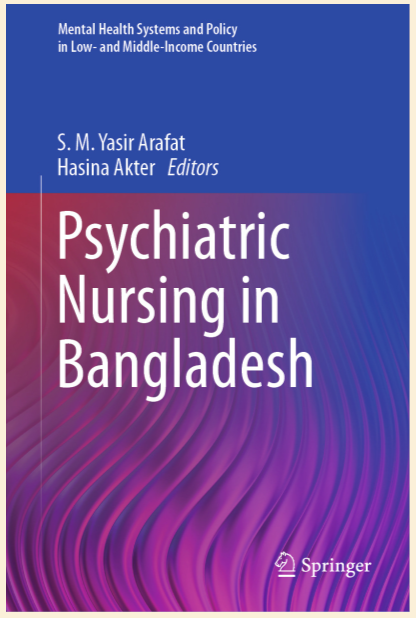
02.Psychiatric Nursing in Bangladesh
08.1. Introduction to Psychiatric Nursing
09.1 The Concept of Psychiatric Nursing and Its Importance
12.Importance of Psychiatric Nursing
13.Scope of Psychiatric Nursing
14.Principles in Psychiatric Nursing
15.Roles and Responsibilities of a Psychiatric Nurse
16.Functions of Psychiatric Nurses in Various Settings
17.Rights of a Psychiatric Patient and Psychiatric Nurse
18.Rights of a Psychiatric Patient
19.Rights of a Psychiatric Nurse
20.Psychiatric Nursing Skills
21.2 Concept of Mental Health
22.Key Components of Mental Health
23.Importance of Mental Health
26.Common Mental Health Disorders
27.Characteristics of Mentally Healthy and Mentally Ill Individuals
28.3 Determinants of Mental Health and Mental Illness
29.4 Mental Health Illness Continuum
30.5 Cultural and Socioeconomic Factors Related to Mental Health Care
31.6 Ethical and Legal Issues in Psychiatric Nursing
32.7 Psychiatric Nursing Process
34.8 Community Mental Health Nursing
35.Principles of Community Mental Health Nursing
36.Roles of Community Mental Health Nurses
37.Challenges in Community Mental Health Nursing in Bangladesh
38.Interventions in Community Mental Health Nursing
39.2. Biopsychosocial Theories of Mental Health and Illness
40.1 Biopsychosocial Model
44.Interconnections and Implications
46.Strengths and Limitations of the Biological Model
47.Implications of the Biological Model in Psychiatric Nursing
48.3 Psychoanalytic Model
49.Structure of Personality
50.Levels of Consciousness
51.Psychosexual Stages of Development
52.Strengths and Limitations of the Psychoanalytic Model
53.Implications of the Psychoanalytic Model in Psychiatric Nursing Care
56.Strengths and Limitations of Social Model
57.Implications of the Social Model in Psychiatric Nursing Care
59.Strengths and Limitations of the Interpersonal Model
60.Implications of the Interpersonal Model in Psychiatric Nursing Care
61.6 Lazarus’s Theory of Emotion
62.Strengths and Limitations of Lazarus’s Theory of Emotion
63.Implications of Lazarus’s Theory of Emotion in Psychiatric Nursing Care
65.Key Components of Crisis Theory
67.Strengths and Limitations of Crisis Theory
68.Implications of Crisis Theory in Psychiatric Nursing Care
69.3. Psychotherapeutic Modalities
70.1 Psychopharmacology and Other Biologic Treatments
71.2 Other Biological Treatments
78.Extrapyramidal Side Effects (EPSE) of Antipsychotics.
80.4 Electroconvulsive Therapy (ECT)
81.5 Complications of ECT.
82.6 Psychotherapy: Individual and Group
83.Definition of Psychotherapy
84.7 Classification of Psychotherapy
87.Person-Centered Therapy
90.Cognitive Behavioral Therapy (CBT)
91.Rational Emotive Behavior Therapy (REBT)
92.Acceptance and Commitment Therapy (ACT)
93.Dialectical Behavior Therapy (DBT)
94.Mindfulness-Based Cognitive Therapy (MBCT)
95.Mindfulness-Based Stress Reduction (MBSR)
96.8 Individual Psychotherapy
97.Definition of Individual Psychotherapy
98.Components of Individual Therapy
99.Role of Nurses in Individual Psychotherapy
100.9 Group Psychotherapy
101.Definition of Group Psychotherapy
102.Components of Group Therapy.
103.Techniques of Group Therapy
104.Factors Contributing to the Group Therapy Process
105.10 Role of Nurses in Group Psychotherapy
106.11 Psychiatric Nursing Interventions
107.Psychiatric Nursing Interventions in Psychotherapeutic Modalities
108.Family Interventions/Therapy
109.12 Indications and Types of Family Therapy
110.13 Types of Family Therapy
112.Family Systems Therapy
113.Solution Focused Brief Therapy (SFBT)
114.Goals of Family Therapy
115.Techniques of Family Therapy
116.Role of Family Interventions in Mental Health Care
117.Role of Nurses in Family Interventions or Family Therapy.
118.4. Therapeutic Communication and Therapeutic Relationship
119.1 Therapeutic Use of Self
120.2 Key Components of Therapeutic Use of Self
122.Importance of Empathy in Psychiatric Nursing
123.3 Nurse–Patient Relationship
124.Nurses Roles in Therapeutic Relationship
125.Phases of the Nurse–Patient Relationship
126.4 Therapeutic Communications
127.5 Barriers to Therapeutic Communication
128.5. Care of Clients with Schizophrenia and Other Psychotic Disorders
134.2 Understanding Psychotic Disorders
137.Symptom Domains of Schizophrenia
138.Diagnosis of Schizophrenia
139.Other Psychotic Disorders
141.Etiology and Risk Factors
145.Nursing Considerations for Antipsychotics
147.Nursing Management Pathway
149.Key Areas of Nursing Interventions
150.Community Care and Relapse Prevention
152.4 Conditions that Require Referral to a Specialist
153.6. Care of Clients with Mood Disorders
158.2 Classification of Mood Disorders
161.Persistent Mood Disorders
162.Mixed Affective States
163.Clinical Manifestations of Mood Disorders
164.Depression: Signs and Symptoms
165.Mania and Hypomania: Signs and Symptoms
166.Core Symptoms (for Both Mania and Hypomania)
167.Suicide Risk Indicators
168.3 Etiology/Risk Factors of Mood Disorders
170.Psychological Factors
172.Cultural Considerations
173.4 Assessment and Diagnosis
174.Diagnosis of Mood Disorders
177.Nursing Role in Assessment
178.Medical Management of Mood Disorders
179.Pharmacological Treatments
180.Electroconvulsive Therapy (ECT)
182.Lifestyle Modifications and Psychoeducation
183.Nursing Management of Mood Disorders
184.Common Nursing Diagnoses
186.Communication and Therapeutic Relationship
188.Nursing Interventions
189.5 Patient and Family Education of Mood Disorders
193.7. Care of Clients with Anxiety Disorders
194.1 Definitions and Concepts
197.4 The Concept of Anxiety in Nursing
199.Risk Factors for Anxiety Disorders
200.Symptoms of Anxiety in Other Psychiatric Disorders
201.Comorbidity between Anxiety Disorders and Other Mental Disorders
202.Cultural Factors in Anxiety Disorders
203.Course of Anxiety Disorders
204.Assessment of a Patient with a Suspected Anxiety Disorder
205.Screening for Anxiety Disorders
206.Treatment for Anxiety Disorders
207.Nursing Management of Anxiety Disorder
209.8. Care of Clients with Psychosomatic Illnesses and Somatoform Disorders
211.Psychosomatic Illnesses
215.ICD-11: Disorders with Somatic Symptoms and Related Disorders
216.DSM-5: Somatic Symptom and Related Disorders
218.Biological and Neurobiological Factors
219.Psychological Factors
220.Social and Cultural Factors
221.Clinical Presentation
222.2 Signs/Symptoms of Somatoform Disorder
223.Diagnostic Evaluation and DSM-5 Criteria
224.3 Conversion Disorder
225.4 Personality Disorders
226.Differential Diagnosis
227.Pathophysiological Mechanisms: An Integrative View
228.Management: Principles and Strategies
229.5 Medical Management of Somatoform Diseases
230.Practical Clinical Pathway
231.Nursing Problems and Interventions
232.Communication Strategies and Therapeutic Alliance
233.Documentation and Legal/Ethical Considerations
234.Outcome Evaluation and Follow-Up
236.9. Care of Clients with Neuropsychiatric Disorders: Obsessive–Compulsive Disorder
238.DSM-5 Diagnostic Criteria for OCD
241.2 Course and Prognosis
242.Medical Management of OCD
243.Nursing Problems and Interventions for OCD
244.Nursing Management of OCD
245.Nursing Management of OCD
248.10. Care of Clients with Delirium, Dementia, and Other Related Disorders
249.1 Definition of Delirium
250.2 DSM-5 Diagnostic Criteria for Delirium
251.3 Signs/Symptoms of Delirium
253.5 Risk Factors for Delirium
254.6 Medical Management of Delirium
255.7 Nursing Problems and Interventions of Delirium
256.8 Medication Management
258.10 Definition of Dementia
259.11 DSM-5 Diagnostic Criteria for Dementia
260.12 Signs/Symptoms of Dementia
261.13 Risk Factors for Dementia
262.14 Medical Management of Dementia
263.15 Nursing Management of Dementia
264.11. Care of Clients with Substance Use Disorders and Substance-Related Disorders
265.1 Epidemiology of Substance Abuse in Bangladesh
266.2 Etiology/Risk Factors of Substance Use Disorders
267.3 Signs/Symptoms of Substance Abuse Disorders
268.4 Diagnostic Criteria for Substance Use Disorder
269.5 Medical Management of Substance Use Disorders
270.6 Nursing Management of Substance Use Disorders
271.12. Care of Clients with Sexual Disorders
274.3 Common Types of Sexual Disorders According to ICD-11
275.4 Risk Factors for Sexual Disorders
276.5 Signs and Symptoms of Sexual Disorders
277.6 DSM-5 Diagnostic Criteria for Sexual Disorders
278.7 Nursing Problems and Interventions of Sexual Disorders
279.8 Preventive Measures for Sexual Disorders
280.13. Care of Clients with Suicide: Children, Adolescents, Adults, and Elders
289.3 Treatment and Interventions
290.4 Nursing Management for Clients at Risk of Suicide
292.6 Crisis Intervention
293.7 Therapeutic Relationships and Communication
295.9 Monitoring and Documentation
296.10 Cultural Competence
297.11 Community Resources and Referrals
298.12 Self-Care for Nurses
299.13 Training and Development
300.14 Suicide Prevention
301.14. Emergency Psychiatric Nursing Care
302.1 Risk Factors for Psychiatric Emergencies
303.2 Interventions in Psychiatric Emergencies
304.3 Nursing Management of Psychiatric Emergencies
305.15. Mental Health Promotion Across the Lifespan
306.1 Theoretical Aspects
307.2 Impact of Socio-Economic Factors on Mental Health Promotion Across the Lifespan
308.3 Key Strategies for Mental Health Promotion Across the Lifespan
309.4 Preventive Measures
310.5 Barriers to Mental Health Promotion
311.16. Public and Private Systems of Care for Mental Health, Including Referral System
320.Fig. 1: Elements of psychiatric nursing
321.Fig. 2: Key components of mental health
322.Fig. 3: Determinants of mental health and mental illness
323.Fig. 4: Mental health illness continuum
324.Fig. 5: Cultural and socioeconomic factors related to mental health care
325.Fig. 6: Roles of community mental health nurses
326.Fig. 7: Challenges in community mental health nursing
327.Fig. 8: Interventions in community mental health nursing
328.Fig. 1: Biopsychosocial model
329.Fig. 2: Paradigm of crisis situation
330.Fig. 3: Phases of crisis
331.Fig. 1: Neuromodulation techniques
332.Fig. 1: Components of the nurse–client relationship
333.Fig. 1: Historical perspective of schizophrenia
334.Fig. 2: The five symptom domains of Schizophrenia
335.Fig. 3: Nursing management pathways of Schizophrenia
336.Fig. 1: Pharmacological management of anxiety disorders
337.Fig. 1: The OCD cycle
338.Fig. 2: Risk factor domains of OCD
339.Fig. 1: Delirium as a clinical spectrum
340.Fig. 1: Components of the mental health system in Bangladesh
341.Fig. 2: Level of public services
342.Fig. 3: Referral pattern in Bangladesh
343.Table 1: Characteristics of mentally healthy and mentally ill individuals
344.Table 1: Psychosocial development
345.Table 2: Ego defense mechanisms
346.Table 3: Key Components of the Social Model
347.Table 4: Stages of development in Sullivan’s interpersonal theory
348.Table 5: Key Components of Lazarus’s Theory of Emotion
349.Table 1: Common classes of psychotropic medications
350.Table 2: Indications and contraindications of electroconvulsive therapy
351.Table 3: Role of psychiatric nurse in ECT
352.Table 4: Benefits and limitations of individual therapy
353.Table 5: Advantages and Disadvantages of Group Therapy
354.Table 6: Difference between individual therapy and group therapy
355.Table 7: Types of psychological interventions with indications
356.Table 1: Phases of nurse–patient relationship
357.Table 2: Barriers to therapeutic communication
358.Table 1: Comparison of nosology of primary psychotic disorders
359.Table 2: Common antipsychotics and key nursing considerations
360.Table 3: Key areas of nursing interventions
361.Table 1: Clinical features of mood disorders
362.Table 1: Peplau’s levels of anxiety
363.Table 2: Modifiable risk and protective factors for anxiety disorders
364.Table 3: Comorbidity in anxiety disorders
365.Table 4: Laboratory tests in patients with suspected anxiety disorders
366.Table 5: Medications used in the treatment of anxiety disorders
367.Table 6: Summarizes the main psychological interventions for anxiety disorders
368.Table 1: Risk and protective factors for OCD
369.Table 1: Risk factors of delirium
370.Table 2: Risk factors of dementia
371.Table 1: Nursing care plan table for clients with substance-related disorders
372.Table 2: Prevention of substance abuse
373.Table 1: Sexual disorders according to DSM-5
374.Table 2: Common nursing problems and associated interventions
375.Table 1: Nursing management of psychiatric emergencies due to psychiatric disorders
376.Table 2: Nursing care plan for patients in psychiatric emergencies due to substance use
377.Table 3: Nursing care plan: catatonia
378.Table 1: Prevention strategies
379.Table 1: Notable NGOs working with vulnerable communities in Bangladesh
380.Table 2: Enduring challenges and ways ahead for mental health services in Bangladesh